How to build a DraftKings F1 lineup
What the 2026 DraftKings scoring changed, how the captain, driver and constructor slots each score differently, and what the lineups that won nine 2026 races were actually made of.
What the 2026 scoring changed
Three DraftKings scoring rules changed for the 2026 season, and all three moved points away from the front of the grid and towards the cars that move through it.
DraftKings published the changes on 5 March 2026. Places gained or lost used to be paid in brackets that stopped at 5 points either way — gaining 14 places paid exactly what gaining 10 paid, and the losses mirrored it. Now every place is worth 1 point, with no published cap. Laps led went from 0.1 a lap to 0.25. And the finishing ladder, which used to pay only P1 to P10, now pays all the way down to P22.
The three changes push the same way. A recovery drive is now worth roughly what a podium is worth. A driver who leads most of a race collects a second scoring line almost as large as several finishing places. And a cheap car that finishes P15 scores 10 points where it used to score none — which is why a cheap driver is no longer only a way to save salary.
The captain slot
The race favourite is the obvious captain because he is the one driver who can collect every scoring line at once. A win from pole, leading 50 of 70 laps, with the fastest lap and his teammate behind him, is 40 for the finish, 12.5 for the laps, 3 for the fastest lap, 5 for the teammate and 1 for being classified — 61.5 points, and 92.25 as captain. The same race scored 54 under the pre-2026 laps-led rate.
What he cannot collect is places. He started first, so there is nothing to gain there, and paying 1.5× for the most expensive driver on a slate is the largest single item a lineup can carry against the $50,000 cap. That is the whole trade: the biggest bonus stack on the board, bought with the money that would otherwise buy two cheap drivers.
The multiplier works on the bad race too. As the pole-sitter's floor section of the DFS board guide shows, Verstappen's retirement from second on the grid at Monaco 2026 scored −20.0 DraftKings points. As a captain it would have been −30.0.
How the 2026 writers pick a captain
Eight 2026 race-preview articles were read for this guide, from RotoWire and SportsBettingDime, covering seven races between March and July 2026. In all eight the captain is the last decision of the week, not the first.
- A tier, not a default. RotoWire's Dan Marcus worked from a fixed top tier of five drivers at the Chinese GP and took whichever was cheapest or best positioned that week.
- Laps led as the reason. RotoWire's C.J. Radune framed the Japanese GP captain around laps led — the favourite was "going to spend a good chunk of this race out front, stacking laps led" — and then took the cheaper second favourite for similar upside at a lower price.
- Two lineups, one per candidate. Marcus published two complete Miami GP lineups, one for each captain candidate, and wrote that qualifying "will ultimately be the deciding factor" between them.
- Captain as salary relief. SportsBettingDime's Phil Bobbitt captained Hulkenberg from P14 at the Belgian GP purely for the salary it freed for the rest of the lineup — Hulkenberg "simply has to score enough points to justify the salary relief that made the rest of the lineup possible."
- Weather as the reason. Bobbitt took Lindblad at the Canadian GP for "too much upside relative to cost, especially if rain introduces additional attrition."
What the 2026 winning lineups did at this slot is in what won in 2026: the captain was the pre-race betting favourite in 2 of the 9 races on record.
The four regular driver slots
A fast car with a grid penalty
A quick car starting P18 that finishes P6 scores 27 for the finish, 12 for the places and 1 for being classified — before the +5 for beating a teammate. A genuine backmarker from the same P18 grid slot finishes about P15 and scores 10, 3 and 1.
Same starting position, less than half the points. The upside belongs to the car, not to the grid slot — a penalised front-runner and a slow car at the back are not the same play. SportsBettingDime's Phil Bobbitt built his Belgian GP lineup around exactly this, on Hadjar carrying a 30-place power-unit penalty and Norris dropped from P3 to P13 by a 10-place one, writing that "position differential is one of the fastest ways to separate yourself in tournaments." He named Spa's long straights and heavy braking zones as the reason it could actually happen there.
What happened to all seven penalised drivers on record in 2026 is in grid penalties and the field.
Cheap cars
Three different reasons to take a cheap driver show up across the eight articles, and they are not interchangeable.
- Places. Bobbitt built the Japanese GP around back-of-grid starters — Alonso from P21, Albon from P17 — for place differential, and treated the mid-pack pick as a trap: he wanted the attrition ceiling, not a floor.
- The teammate bonus. RotoWire's Dan Marcus made Gasly his top driver choice at the Miami GP because "he is rarely challenged by teammate Franco Colapinto." The +5 for finishing ahead of a teammate is a scoring line a cheap car can collect wherever it finishes.
- Survival. Bobbitt took Hulkenberg at the Canadian GP as a "competent veteran" — a cheap car picked to still be running at the end of a chaotic race rather than to be quick.
The constructor slot
A constructor scores both of its drivers' finishing points, laps led and fastest lap, plus +2 when both cars are classified, +5 when both finish in the top 10 and +3 when both are on the podium.
So the team whose fast car starts P22 and drives to P8 collects the 23 points for P8 and nothing for the 14 places. Two cars in P4 and P6 collect 32 and 27, plus 2 for both being classified and 5 for both being in the top 10 — 66 points with nobody near the podium. The slower car of the pair decides both of the big bonuses.
The cheap-constructor lever
The slot is also a way to free salary, and 2026 writers use it that way. RotoWire's Dan Marcus took Audi at $3,700 at the Chinese GP, and Racing Bulls at $3,700 against Mercedes at $15,000 in one of his two Miami GP lineups, to pay for drivers elsewhere.
That lever did not reach a winning lineup in 2026. Across the 9 races with a DraftKings contest export, no winning lineup and none of the 41 top-10 lineups used a constructor priced 7th or cheaper of the 11 teams — see what won in 2026. That is scoped to the largest-field tournament at each race; it says nothing about cash games or single-entry contests, which this data does not cover.
Track type
Whether places can be gained at all changes the shape of the lineup. The 2026 articles split into two lanes on this, and they build differently.
Where nobody passes
The grid decides the race, so the score is decided by which bonuses are already locked in on Saturday night. SportsBettingDime's Phil Bobbitt wrote of Monaco that it is "less about uncovering hidden gems and more about identifying which bonuses are most likely to fall into your lap," and built the pole-sitter as captain, that driver's own team as the constructor, and teammate pairs taken in grid order — every piece chosen for a bonus the grid had already settled. RotoWire's Dan Marcus put Hungary in the same group, calling it a track with "minimal room for passing." Two of the seven races covered by the eight articles were written this way.
Where places are live
A circuit with long straights, or a weekend carrying grid penalties or rain. Bobbitt's Belgian GP lineup was written for tournaments only. His Canadian GP captain pick was justified on rain adding attrition, and at the Japanese GP he wrote that "when things start breaking in the midfield, that's where these lineups go from solid … to very live for first place." Under the 2026 scoring every place that changes hands in that chaos is a full point, which is why attrition is discussed as a place-differential amplifier rather than only as a risk.
When to build
RotoWire's Dan Marcus names three checkpoints before lock at the Chinese GP, in this order:
- Practice. The first read on pace, and the first sign a team is quicker or slower than its salary.
- Qualifying. The starting grid, and with it every place-differential number on the board.
- The sprint race, on a sprint weekend. A full race result, on the same tyres and the same circuit, before the main race.
This is why the DFS board is published twice — a provisional board built before qualifying, and a final board rebuilt on the real grid. The difference between them is set out in what the board is.
Two of the eight articles show what waiting looks like in practice. Marcus published two complete Miami GP lineups rather than one, with qualifying as the tie-breaker between the captain candidates. At the Hungarian GP he declined to price in an Aston Martin upgrade at all, writing that its practice pace "wasn't particularly notable, but that outlook could change."
Tournaments and cash games
A tournament pays the top few finishers, so it rewards a lineup nobody else has. A cash game pays roughly the top half, so it rewards the lineup least likely to fall over.
Under the 2026 scoring the two builds separate almost entirely on where the place-differential risk sits: recovery drives and retirement-prone front-runners for a tournament, bonus stacks and cars that simply finish for cash. The contest tiers themselves — entry fees, field sizes and prize pools — are in contest types and prize pools.
All eight 2026 articles read for this guide build for tournaments. SportsBettingDime's Phil Bobbitt was explicit at the Belgian GP: "if you're chasing five figures, that's the only strategy worth considering." The Monaco build is the exception — it reads like a cash lineup without being called one, because at a track where the grid decides the race the low-variance build and the tournament build are the same build.
What won in 2026
This section is contest data, not a writer's opinion. It reads the winning lineup and the top-10 lineups out of the largest-field tournament at each 2026 race that has a DraftKings contest export — 9 of the 11 races run through the Hungarian GP. The Austrian and British GPs have no export and are excluded. That is 9 winning lineups and 41 distinct top-10 builds.










Where the leverage came from
If every entrant picked at random, each slot would still land on a fixed share of lineups just from the roster rules: 1 of 22 drivers at captain (4.5%), 5 of 22 drivers across the four regular driver slots (22.7% each) and 1 of 11 teams at constructor (9.1%). Measuring the winners against that baseline says which slot they were actually different at.
What the two decisive slots looked like
Five things the nine winners had in common
- They spent the cap. 4 of the 9 winning lineups used the full $50,000 cap. The other 5 left between $100 and $1,200 unspent — a median of $100. Across all 41 top-10 builds the median left unspent was $200.
- None went cheap at constructor. 0 of the 9 winners and 0 of the 41 top-10 builds used a constructor from the bottom 4 of the 11 teams by price.
- The captain was usually not the favourite. The pre-race betting favourite captained 2 of the 9 winners — Russell at the Australian GP and Antonelli at the Monaco GP. The other 7 winning captains were somebody else.
- The most-owned driver was usually in the winner. The slate's single most-owned driver was in the winning lineup in 7 of the 9 races, so leaving him out meant leaving out the winning lineup.
- A winning build was often not a unique one. 14 separate entries submitted the identical six-piece lineup that won at the Australian GP, 10 at the Belgian GP and 9 at the Chinese GP. Once real drivers finish where they finish, only a handful of distinct builds can reach the top of the scoring.
Grid penalties and the field
Only 2 of the 9 races with a DraftKings contest export carry a tracked grid penalty: the Belgian GP, with 5 penalised drivers, and the Hungarian GP, with 2. Seven driver-penalties is a small sample — the direction below is firmer than the size of it.


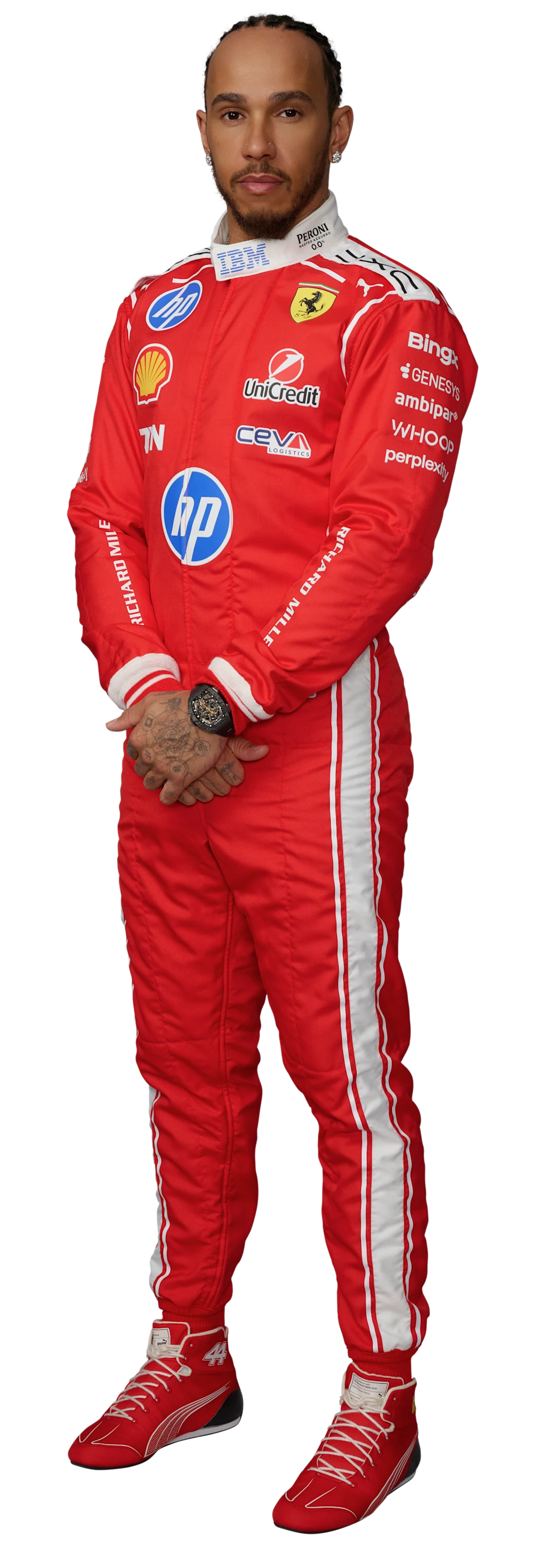

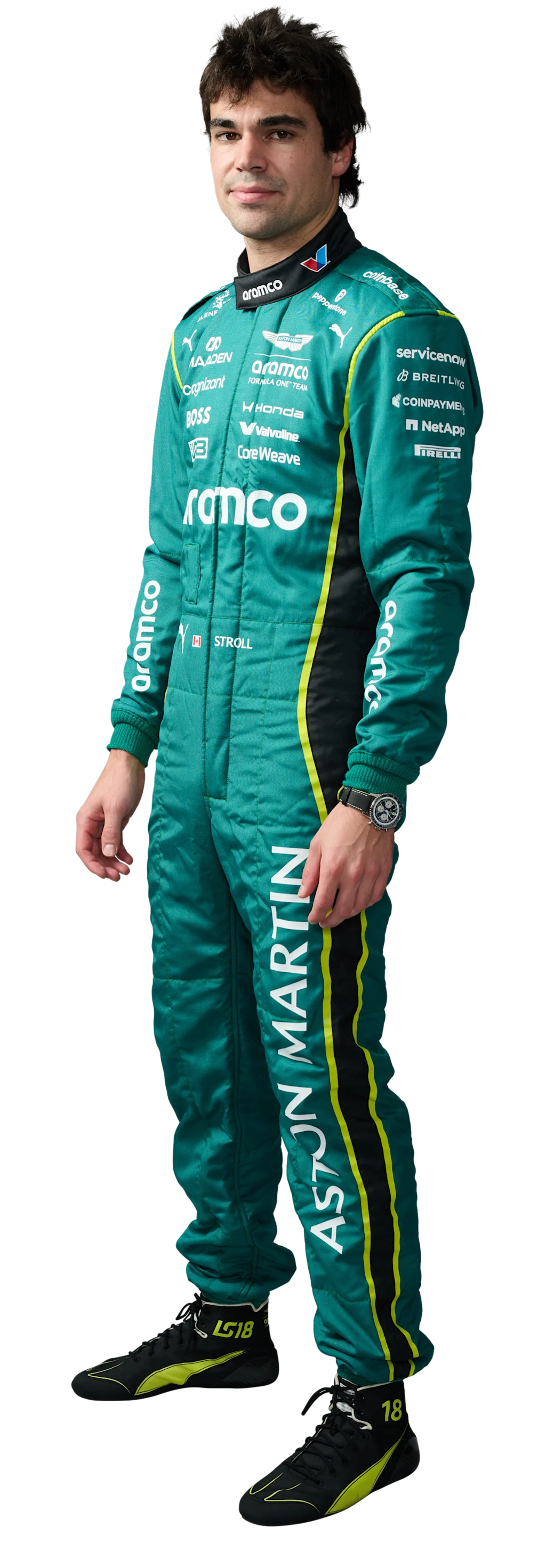
- All 7 were over-owned. Real ownership in a regular driver slot ran +7.5 percentage points above the projected ownership on average, against −1.5 for the other 37 drivers in the same two races.
- 2 of the 7 reached a top-10 lineup. Hadjar, captained at the Belgian GP, in the single build that filled all ten of the winning rank slots; and Antonelli at the Hungarian GP, in 1 of the 8 distinct top-10 builds there.
- The payoff came from the car, not from the penalty. Hadjar's 30-place penalty produced an 11-place grid drop, P10 to P21, on a car quick enough to reach P6. Alonso's 20 places and Stroll's 10 landed on cars that finished P19 and P20 and scored +3 and +0 place points.
- A small penalty leaves nothing to regain. Hamilton was the most-owned of the seven in a regular driver slot at 25.1%. His 3-place drop only moved him to the third row, he finished exactly where he started at P5, and he scored 0 place points and appeared in no top-10 build.
Sources
The scoring rules come from DraftKings. The strategy sections read eight 2026 race-preview articles from RotoWire and SportsBettingDime, covering seven races between March and July 2026 — those are the two outlets publishing F1 DFS previews through the 2026 season. The contest figures in what won in 2026 and grid penalties and the field are read from DraftKings contest exports for 9 of the 11 2026 races.